UK industrial control systems targeted, warns leaked NCSC document

Industrial control systems across several UK sectors have been targeted in recent activity by known state-sponsored attackers, according to a leaked report by the UK National Cyber Security Authority.

The UK is one of several countries targeted by cyber attackers seeking to compromise industrial control systems (ICS), according to a leaked document from the National Cyber Securty Centre (NCSC).

Some ICSs may have been compromised in attacks by advanced state-sponsored hostile threat actors, according to an NCSC document leaked to Motherboard by an energy industry source and confirmed by two others on condition of anonymity. Although modern ICSs typically found in the energy sector and other suppliers of critical national infrastructure are designed to be secure, legacy systems were not. The fact that many of these legacy systems are still widely used has, in recent years, raised concerns about the resilience to cyber attacks. But according to Airbus, there are a growing number of options available to protect legacy systems. The aircraft manufacturer is among suppliers that are developing ways to add security where it was lacking.

Cyber Security

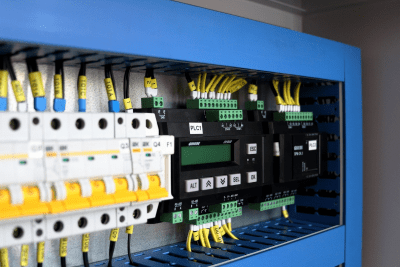
Kevin Jones, head of cyber security innovation at Airbus, told Computer Weekly recently that there is a good level of awareness, understanding and protection among operators of critical national infrastructure (CNI) in the UK, and attacking ICSs is not as easy as many people think. Despite vulnerabilities in individual components, once these are put together in a bigger system, it is a lot more difficult to exploit those vulnerabilities than some people claim, said Jones. “In the lab, it is easy to exploit these vulnerabilities because we have direct network access to the PLCs [programmable logic controllers], but in the real world there are a few things that can help to make it more difficult for would-be attackers, such as good network security, including various filters on the web traffic,” he said.

However, cyber defence of CNI is a key focus for the NCSC and the leaked document warns of cyber attacks targeting energy, engineering, industrial control and water supply companies. The NCSC is also believed to be providing technical guidance to affected organisations. The uptick in this activity is believed to be fairly recent and potentially connected to reports of malicious emails sent to senior engineers at the Electricity Supply Board (ESB), which supplies Northern Ireland and the Republic of Ireland, and US government warnings in June 2017 of attacks targeting nuclear and energy firms.
Source: Warwick Ashford @ Computer Weekly

Belfast digital testbed will boost smart manufacturing

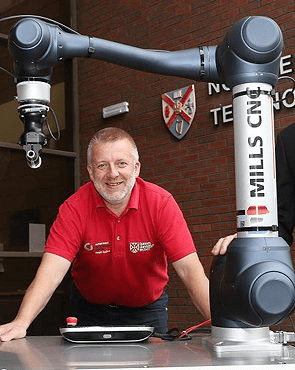
A £500,000 digital testbed, aimed at creating a step change in smart manufacturing, is being built at Queen’s University Belfast to help develop new technologies and opportunities for local businesses. The project – a collaboration between Queen’s, BT and Cisco – is part of a co-investment to create a 5G-enabled digital factory.

The testbed, located at Queen’s University’s Northern Ireland Technology Centre (NITC), will provide an opportunity for local industry to collaborate and explore the benefits of 5G connectivity and digitalisation in their manufacturing operations. It will also help Queen’s researchers to transfer their research to industry in areas such as digital twins, cybersecurity, digitised manufacturing and Industry 4.0.

Colm Higgins, head of Queen’s University’s Northern Ireland Technology Centre

“As the manufacturing sector moves towards digital technologies and supporting Industry 4.0, digital testing is vital in helping to improve performance and quality of production,” says the NITC’s head, Colm Higgins. “5G technology offers higher speeds, greater capacity and shorter response times to the digital environment. This £500k investment by BT, Cisco and Queen’s is an important collaboration of academia and business and will help us to deliver our mission of driving innovation and creating solutions from R&D. This will in turn help to grow market opportunities and create a step change in smart manufacturing.”

Source: Drives & Controls

PLCs, HMIs bolster industrial automation range at Farnell

To increase the depth and breadth of its industrial automation and control range Farnell has introduced variable speed drives, Programmable Logic Controls (PLCs) and Human Machine Interfaces (HMIs) from Mitsubishi Electric.

These products are suitable for a wide range of applications including smart manufacturing driven by the Industrial Internet of Things (IIoT) and Industry 4.0. System designers can easily integrate this electronic automation technology to develop new machinery and equipment much faster.

Next day delivery across Europe will benefit engineers completing critical maintenance and repairs, allowing work to be carried out with reduced downtime and production losses. Mitsubishi Electric’s variable speed drives, PLCs and HMIs complement Farnell’s existing industrial automation and process control portfolio, bringing higher productivity and quality to the factory floor. Some of the most in-demand products by Mitsubishi Electric now available from Farnell include:

Variable Speed Drives

Mitsubishi Electric’s range of compact, flexible, versatile and cost-effective variable speed drives are designed for a service life of more than 10 years and incorporate many safety features.

  • The FR-D700 Frequency Inverter is a compact micro-drive solution offering simple, timesaving start up, increased energy savings with its Optimum Excitation Control (OEC) function, and a high overload capacity of 200 percent. Typical applications include feeder and conveyor drives, matching tools or gate and door drives.
  • The FR-E700 SC Frequency Inverter is an expandable compact drive solution with simple and fast installation. It is exceptionally user-friendly and has extensive communication options. This is an economical and highly versatile solution for a wide range of applications from textile machines to door and gate systems and material handling systems.

Simon Meadmore, Global Head of IP&E at Farnell says: “Mitsubishi Electric is an innovator in factory automation technology, and this new agreement allows us to provide even more high quality, reliable products to our customers. The introduction of Mitsubishi Electric’s best-selling variable speed drives, PLCs and HMIs greatly enhance the depth and breadth of our industrial automation and process control portfolio, making Farnell a key supplier in Europe.”

Source: Mick Elliott @ Engineering Specifier

Nano-Engineering – The Future?

At one billionth of a metre in size, it can be hard to grasp just how small nanoparticles are. To put it into perspective, if a nanoparticle was the size of a football, then a kiwi would be the size of the Earth by comparison. Here Neil Ballinger, Head of EMEA at EU Automation, explains how these tiny particles will make a large impact in the future of engineering.

Nanoengineering involves the careful manipulation of structures on the nanoscale and has been steadily growing as an area of interest since the invention of the electron microscope in the 1930s. Because they use beams of accelerated electrons as a source of illumination, electron microscopes have a higher resolving power than conventional light microscopes and can reveal the structure of much smaller objects.

These early interactions with structures on the nanoscale were primarily observational, rather than direct interactions, but they marked the beginning of our journey into nanotechnology. Without them, it is likely that the Scanning Tunneling Microscope (STM) wouldn’t have been invented in the 1980s. This was the first microscope that could image and manipulate structures on the nanoscale and earned its inventors, Gerd Binnig and Heinrich Rohrer, the Nobel Prize for Physics in 1986.

Now, the uses of nanotechnology are growing and look set to make a big impact in industrial settings over the next decade. From drug delivery systems to smart sensors, the potential applications of this technology in the engineering industry are vast.

Source: Lana Deamer @ Engineering Specifier

Fluid Power & Systems Exhibition

Drives & Controls Exhibition (NEC Birmingham, 25- 27 January 2021) is recognised as the UK’s leading show for Automation, Power Transmission and Motion Engineering It is a biennial event and is co-located with 5 other Industrial exhibitions which will make it the largest Manufacturing/Industrial Event in the UK in 2021. The exhibition has grown over the last decade and in 2018, once again had over 13,000 visitors. There will be a full Conference programme, EPTDA and Gambica Pavilions which will focus on Automation and the trends affecting our manufacturing base.

Fluid Power & Systems 2022 is the only event in the UK that is 100% focused on a comprehensive range of hydraulic and pneumatic equipment, together with products that facilitate better electro-mechanic system design and application for improved process automation, control, monitoring and analytics.

Fully supported by the British Fluid Power Association (BFPA), British Valve & Actuator Association (BVAA) and Hydraulics & Pneumatics magazine, Fluid Power & Systems comprises the largest gathering of world-class companies displaying and demonstrating the latest in mechanical and electro-mechanical equipment.

Full programme of FREE technical seminars supported with top class speakers offering expert insight and practical advice on the issues that affect you the most. Co-located with Air-Tech (Compressed Air, Generators and Pneumatics), Drives and Controls, Plant & Asset Management, together with a return of the newly launched Smart Industry Expo.

Aquajet RECO Control System Increases Water Treatment Efficiency & Accountability

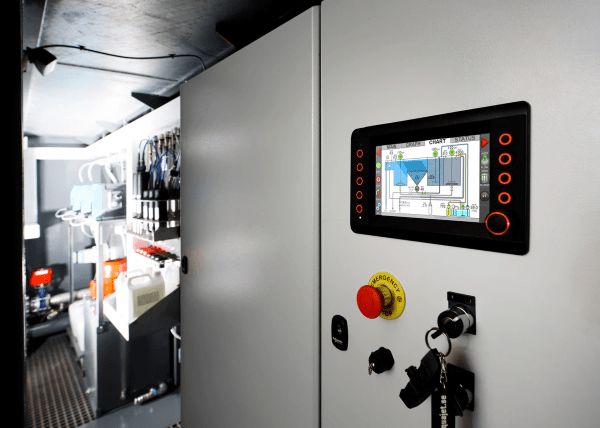
Aquajet maximizes efficiency in water treatment with the advanced RECO Control System. The RECO Control System allows for fully automated, continuous monitoring of both pH and turbidity, increasing productivity and opening up opportunities for better workforce utilization due to minimal operator oversight. The RECO Control System also provides easily shareable water quality documentation, allowing contractors to demonstrate accountability for operating in increasingly regulated environments.

“Aquajet’s focus in evolving Hydrodemolition technology isn’t just about faster and more productive material removal,” said Roger Simonsson, Aquajet’ managing director. “We are striving to find ways to increase productivity while also protecting the environment. Water treatment is a key part of that. When we couldn’t find a fool-proof monitoring system existing on the market, we took it on ourselves to create one.”

He goes on to say “The RECO system applies cutting-edge technology for continuous, worry-free water treatment. There’s no need for labor-intensive, protracted filtration systems, and no need to worry if Hydrodemolition wastewater meets levels for release into the sewer system. Everyone from the operator to the general contractor to the project investor and public can rest easy thanks to our innovative monitoring technology.”

The RECO is unique to Aquajet’s EcoClear and controls major functions of this innovative water treatment solution. The EcoClear is a compact, self-contained system capable of moving as much as 88 gpm, or about 5,238 gallons (20 cubic meters) per hour, through a series of treatment chambers that reduce pH from 13 to 7 and suspended solids from 15,000 to 20-40 mg particles/liter. The RECO Control System employs optical turbidity sensors and pH probes as water moves through the self-contained unit. It provides real-time data such as total suspended solids (TSS) values and overall flow through the machine. This information is easily viewed via the display screen on the EcoClear. Data can also be shared digitally with project stakeholders through the RECO system. Detailed daily reports offer insight into the cleanliness of the discharged water, including pH levels and the amount of water that was treated, providing proof of compliance to environmental regulations.

With the RECO system, contractors only need to set desired parameters for pH and ppm. After that, the system requires infrequent attention and occasional replacement of carbon dioxide, the agent used to reduce water pH. This frees up crew members to attend to other tasks around the jobsite, increasing productivity and streamlining labor. If water does not reach specified parameters during initial treatment, the RECO shuts down the EcoClear’s feed, preventing dirty water from escaping. The water then starts to recirculate within the unit until it meets the preset values. Contractors can continue working some distance from the machine, confident no dirty water will escape into the environment. Treated water can also be recirculated through a Power Pack or high-pressure pump system for ruse by the Hydrodemolition robot. Using a closed-loop setup, contactors can recycle up to 90% of the Hydrodemolition blast water for significant savings.